

Inclusion and Parity in the Music Sector: ACe20’s Contribution to the EU-CODE Workshop in Madrid
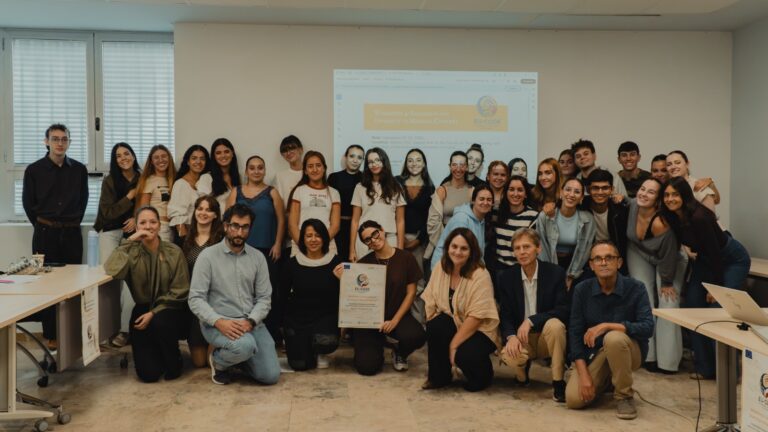
On September 27 and 28, 2026, the Main Hall of the Faculty of Teacher Training and Education at the Autonomous University of Madrid hosted the workshop titled Inclusion and Diversity in Musical Context, organized within the framework of the European project EU-CODE. The initiative, coordinated by the “Santa Cecilia” Conservatory of Music in Rome and co-funded by the European Union’s Creative Europe program, involves an international consortium that also includes the Liszt Ferenc Academy of Music in Budapest, the Autonomous University of Madrid, and the organization ACe20. The project aims to redefine the wind band landscape in Europe by promoting co-creation, cultural diversity, sustainability, and inclusive participation through the language of music.
Kickstarting the workshop’s sessions was a contribution prepared by the ACe20 team and presented by Letizia Tessicini, Rosita Ortu, Lavinia Savelli, and Federico Battistoni, titled Mainstreaming Inclusion and Gender Equality. Strategic Project Design and EU Policy Alignment for a Diverse Ecosystem. The presentation focused on the need to translate principles of equality and inclusion into concrete actions within the lifecycle of EU-supported projects. Through a structured presentation, the team illustrated operational methodologies aimed at ensuring full compliance with EU directives, highlighting the essential phases of strategic design: from an initial diagnosis based on gender-disaggregated data to integrating the equity dimension directly into scientific and cultural methodology, as well as adopting inclusive language and constantly monitoring generated impacts.
The workshop program featured a series of other important academic contributions focused on technological innovation and gender perspectives in music pedagogy. Sebastián Izquierdo Leal, from the Autonomous University of Madrid, presented a paper titled Real-Time Web Technologies for Participatory Music Systems, exploring the use of real-time web technologies to foster participatory and accessible music systems. Subsequently, Pilar Serrano Betored, a lecturer at the same university, delivered the talk Gender studies and music education: a possible methodology?, proposing a methodological reflection on integrating gender studies within music education pathways. The day concluded with a panel discussion and a Q&A session aimed at synthesizing the findings that emerged from the sessions.
The event offered an opportunity to delve into why gender mainstreaming currently represents a fundamental pillar in developing research proposals and managing project management. With the introduction of the European Gender Equality Strategy 2020–2025 and the reference to Article 8 of the Treaty on the Functioning of the European Union, the gender dimension has evolved from being a mere formal element to an eligibility requirement and an indicator of excellence for receiving European funding. This paradigm shift requires a deep transformation of organizational structures, necessitating the adoption of Gender Equality Plans and promoting transparent management practices.
It is within this framework that ACe20 operates, having adopted and promoted parity and equity strategies in European project management processes since 2020. For the organization, applying a gender perspective to project management means ensuring balance in consortium composition, fostering transparency in selection procedures, and strengthening an inclusive communication culture. This ongoing commitment enables ACe20 to serve as a benchmark for aligning EU policy requirements with the realization of a modern, fair, and sustainable cultural ecosystem.