

Behind the Scenes of Erasmus+: What a European Project Designer Does and Feels
When we think of European projects, our minds immediately jump to big acronyms, cultural exchanges, and funding from Brussels. But who is behind the creation of these opportunities? What does a project designer actually do and, above all, what emotions do they experience when an abstract idea turns into reality?
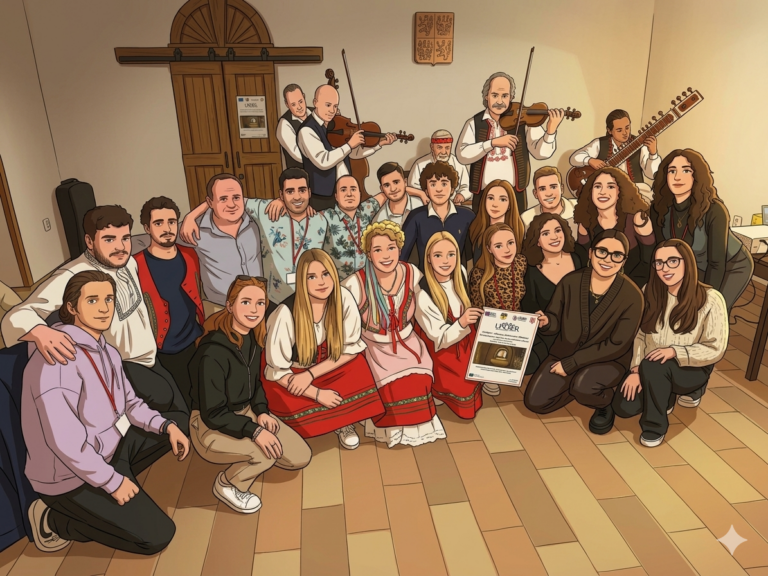
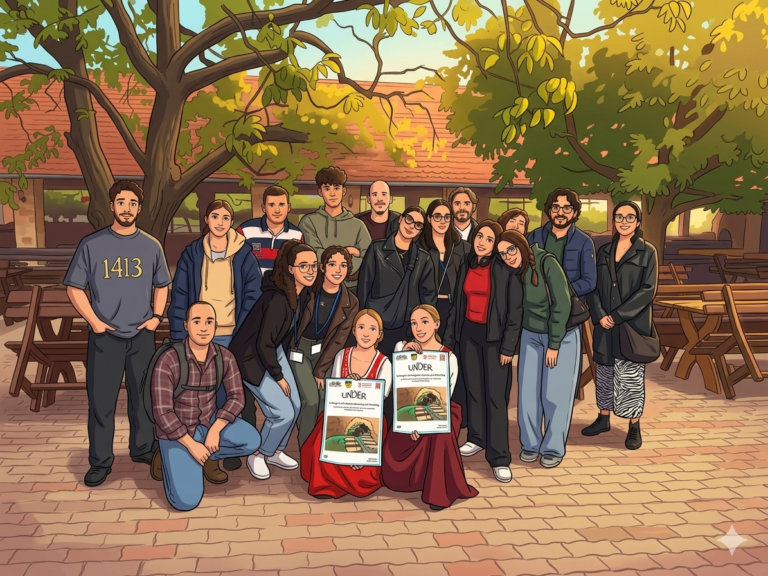
To find out, we stepped behind the scenes of UNDER (Underground Navigators Exploring and Revealing), an Erasmus+ project dedicated to training underground‑site operators and enhancing Europe’s hypogean heritage. We asked Lucia, coordinator, project manager, and the mind behind the proposal together with the ACe20 agency and partners from Malta, Hungary, and the Czech Republic, to tell us about the emotional and professional journey of those who write and manage the future of young Europeans.
A profession with no “typical day”: flexibility and problem‑solving
Forget the idea of static, repetitive office work. The daily life of a European project designer is a constant balancing act. “There’s no real typical day,” Lucia explains. “I can go from writing documents and reports to preparing international mobilities with all their complex logistics. From online meetings with foreign partners to the practical management of participants, all the way to social media communication or formal relations with institutions. It’s an extremely dynamic job.”
To survive this pace, technical skills (such as language proficiency, especially English) are not enough. Invisible yet essential qualities are needed: strong planning abilities, mental flexibility, and a natural talent for problem‑solving. But the most important skill, Lucia says, is something else: “Above all, you need the ability to build communication bridges and relationships of trust between people and organizations that are very different from one another, culturally and often in age.”
Emotional rollercoaster: from paper to reality
What drives someone to take on the complex machinery of European project design? For Lucia, the spark is faith in cooperation: “I find it extraordinary to see how small organizations, often located in peripheral areas, share similar challenges and can learn from each other and grow together.”
However, the journey is full of emotional contrasts. The least visible part, yet the most demanding both mentally and physically, is undoubtedly administrative management and reporting. Behind every single activity participants experience on the ground lie months of silent preparation, paperwork, monitoring, and coordination among different countries.
The moment of highest tension? “The hardest day is always the one before an international mobility begins, when anxiety rises and you need to make sure every logistical and organizational detail works perfectly.”
But it’s precisely when the machine starts moving that the project designer’s work turns into pure gratification. “What does it feel like to see your project accepted and then implemented? It’s an enormous satisfaction,” Lucia admits. “When you write an application, you only have an idea on paper. Seeing people from four countries meet, collaborate, and form friendships thanks to that idea is truly special. It makes you believe even more in your work and in its practical impact.”
Inspiration beyond conference rooms
One of the secrets project designers learn in the field is that bureaucracy is only the shell: the heart of a project beats in informal moments. In the case of UNDER, the biggest challenge was connecting three very different European mobilities into a coherent training path for young cultural operators.
Yet the best results didn’t come from formal work sessions. “Many of the project’s most brilliant ideas weren’t born in conference rooms, but during a dinner, a bus ride, or a walk through the sites we visited,” the project manager reveals. “European cooperation often grows in the most informal moments, where curiosity and openness toward different cultures spark the right inspiration.”
Lucia’s most memorable moment is tied to an episode of pure communal empathy, which became the perfect metaphor for her work: “The descent into the caves in Hungary. Seeing people from different countries help each other in such a unique and challenging environment was the mirror of the project’s spirit. The most effective team‑building activity I’ve ever experienced.”
Final verdict: is it worth it?
At the end of a project, between the exhaustion of final reports and the nostalgia of goodbyes, the balance for a project designer is almost always positive. “I’ve learned that even very small organizations can generate significant European impact when they work together,” Lucia concludes. “Every European project is demanding, but it gives back so much, both professionally and personally. Would I do it again? Absolutely yes.”
And to those who look at this world with hesitation, the expert’s advice is to break down the stereotypes: “Don’t think European projects are something distant, astronomical, or reserved for a small circle of experts. Everyone can take part. They are concrete, real, and accessible opportunities for personal and professional growth.”